 Published by Sue Johns-Chapman
Published Date 28.08.2026
Published by Sue Johns-Chapman
Published Date 28.08.2026 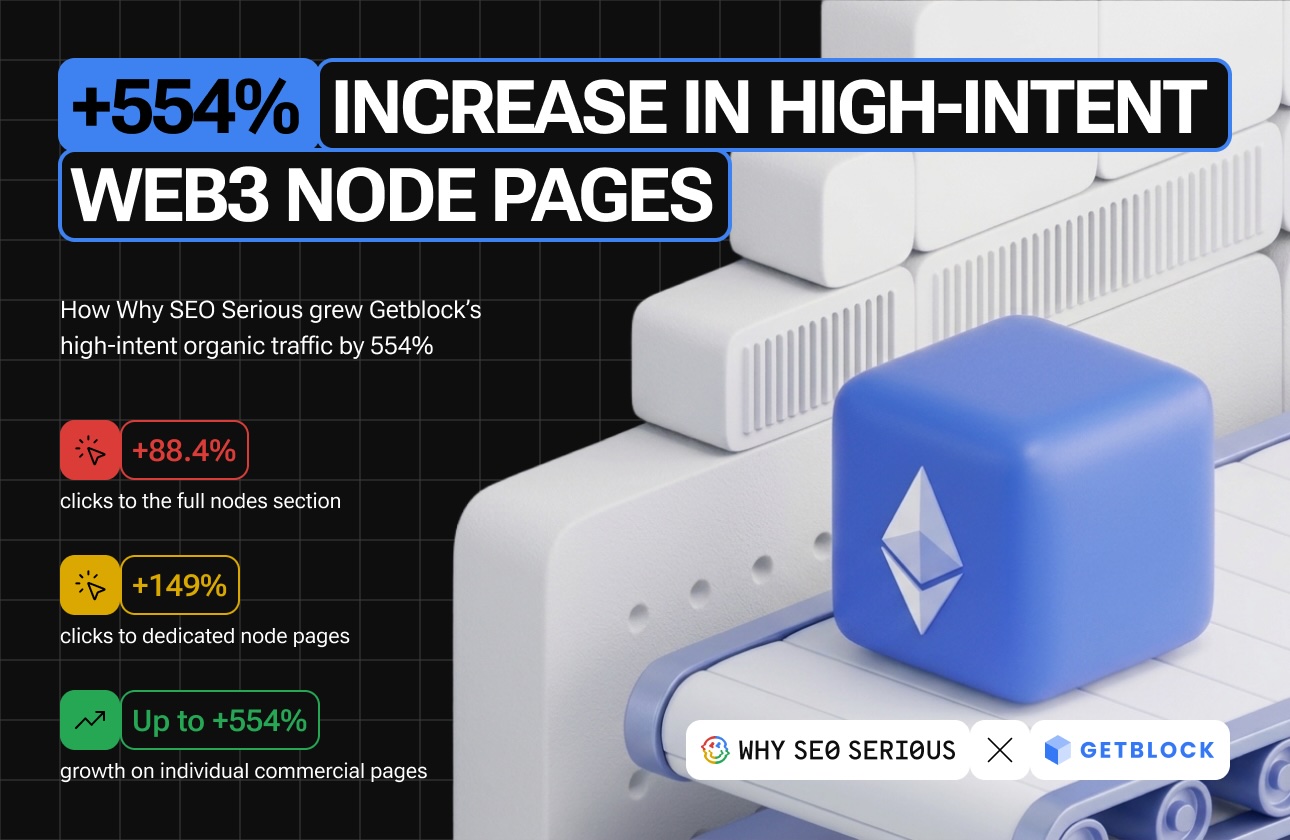
Who we are
Why SEO Serious is an organic marketing agency. We often work with fintech, Web3 and other niches where the search demand is technical and getting the intent wrong means attracting the wrong audience.
At Why SEO Serious, we have a rule: if an SEO problem keeps forcing teams to guess, it is probably worth building a tool for it.
That is how we ended up developing AORA to test which page changes actually affect rankings, Discover Trends to analyse Google Discover, and our own Scraper API for collecting search and web data at scale.
We treat client projects in much the same way: understand where growth is stuck, then decide what work is needed. Sometimes it is technical SEO, sometimes content or links. Usually, as with GetBlock, several parts need to work together. Internally, we call this omni-SEO.
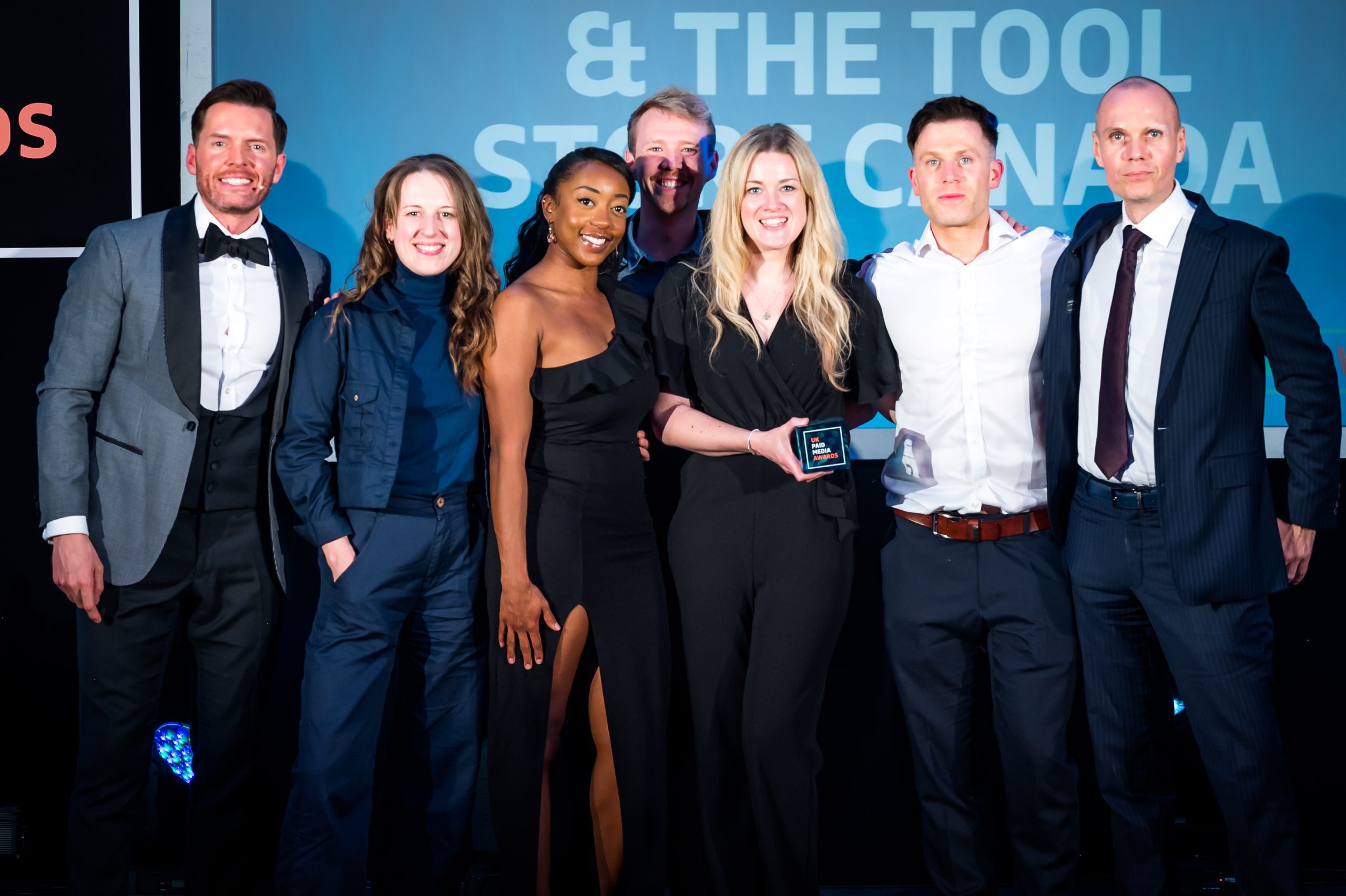
“Best European SEO Campaign is a shortlist I’m glad we’re on. GetBlock is a genuinely technical product, and there was no single clever move behind the 554% growth on high-intent node pages. It came from understanding a narrow niche properly, at a point when the site was in a difficult position, and then getting a long run of small decisions right. That kind of work is harder to show off than a one-off win, which is why I’m glad it is what the judges recognised.”
Greg Andreevsky, CEO & founder of Why SEO Serious
The business challenge
GetBlock operates in a highly technical B2B market. Its core audience includes Web3 developers, CTOs and infrastructure engineers choosing RPC providers for production environments.
These users rarely search broadly for blockchain infrastructure. They look for a specific network and product: an RPC endpoint, archive node, API or dedicated node. The search is narrow, technical and often close to provider selection.
That made GetBlock’s nodes section a critical acquisition area. The client associated visits to these pages closely with developer registrations. Because our reporting access was limited to Google Search Console, we set a measurable objective: bring more high-intent developers to the nodes section and track progress through organic clicks and visibility.
At the same time, GetBlock was moving to a new admin system. Engineering resources were tied up in the migration, while the commercially important nodes cluster was recovering from losses after the summer Core Update.
The business could not put the migration on hold, but it could not leave a commercially important acquisition cluster waiting for engineering resources either.
One section, many acquisition markets
The nodes section looked like a single website category. In search, it behaved more like a portfolio of separate markets.
Each blockchain network had its own demand, competitors, terminology and SERP patterns. A developer looking for an Ethereum RPC endpoint was not choosing from the same search landscape as someone looking for a Solana archive node.
Optimising the section as one generic category would have blurred those differences. We treated every priority node page as an individual acquisition market, while using a shared system to scale execution.
Scale what did not depend on engineering
With the migration consuming technical capacity, we concentrated on changes that could be released without heavy development.
We started with a metadata template that combined the network, product and intent behind each query. Titles and descriptions could be adapted to individual SERPs, then reused as GetBlock added new networks.
The same structure guided on-page content. We prepared briefs for each priority page, explaining what needed to change and why. GetBlock’s content team handled production, while we reviewed releases, tracked performance and adjusted the next set of briefs. Internal guidelines reduced avoidable revisions at a time when the client had little capacity to spare.
Link building ran alongside the on-page work at a consistent pace. Rather than distributing links evenly across the site, we concentrated outreach and crowd links on the nodes hub and the priority pages serving active acquisition demand.
Removing competition from inside the site
The blog had accumulated articles covering similar blockchain topics. Some targeted overlapping intent and competed with each other or with commercial node pages.
We audited content at the intent level, mapped overlaps and paused production of similar topics. Where consolidation was needed, we prepared a phased plan that could wait for technical capacity without allowing the problem to grow.
Testing the system during another Core Update
The December Core Update created another period of volatility. Traffic fell in the faucet and explorer sections, which were outside our active scope and still required separate technical work.
The nodes pages and selected blog content continued to grow during the same rollout. This does not prove that the work made them immune to updates. It does show that the clusters under active optimisation held up better than the sections still waiting for work.
The results
Clicks to the full nodes section increased by 88.4%, while the dedicated-nodes section grew by 149%.
Growth across individual commercial pages ranged from 96% to 554%. The largest increases came from:
- Ethereum: 554%;
- Solana: 322%;
- BSC: 302%;
- Base: 200%.
The nodes cluster also moved closer to first-page visibility across priority searches.
Google Search Console does not show what happened after the click, so we do not translate these results into registrations or revenue. What we can demonstrate is that GetBlock attracted substantially more organic traffic to the pages used by developers with a specific infrastructure need.
GetBlock also gained a repeatable SEO system for launching and growing node pages as its network coverage expands, without making every improvement dependent on a major technical release.